Understanding the Thick Skin Challenge
Thick nasal skin represents one of the most challenging scenarios in rhinoplasty, requiring specialized techniques, realistic expectations, and often prolonged patience during the healing process. Patients with thick, sebaceous (oily) skin face a fundamentally different surgical approach compared to those with thin skin—less about reduction and more about strategic structural enhancement.
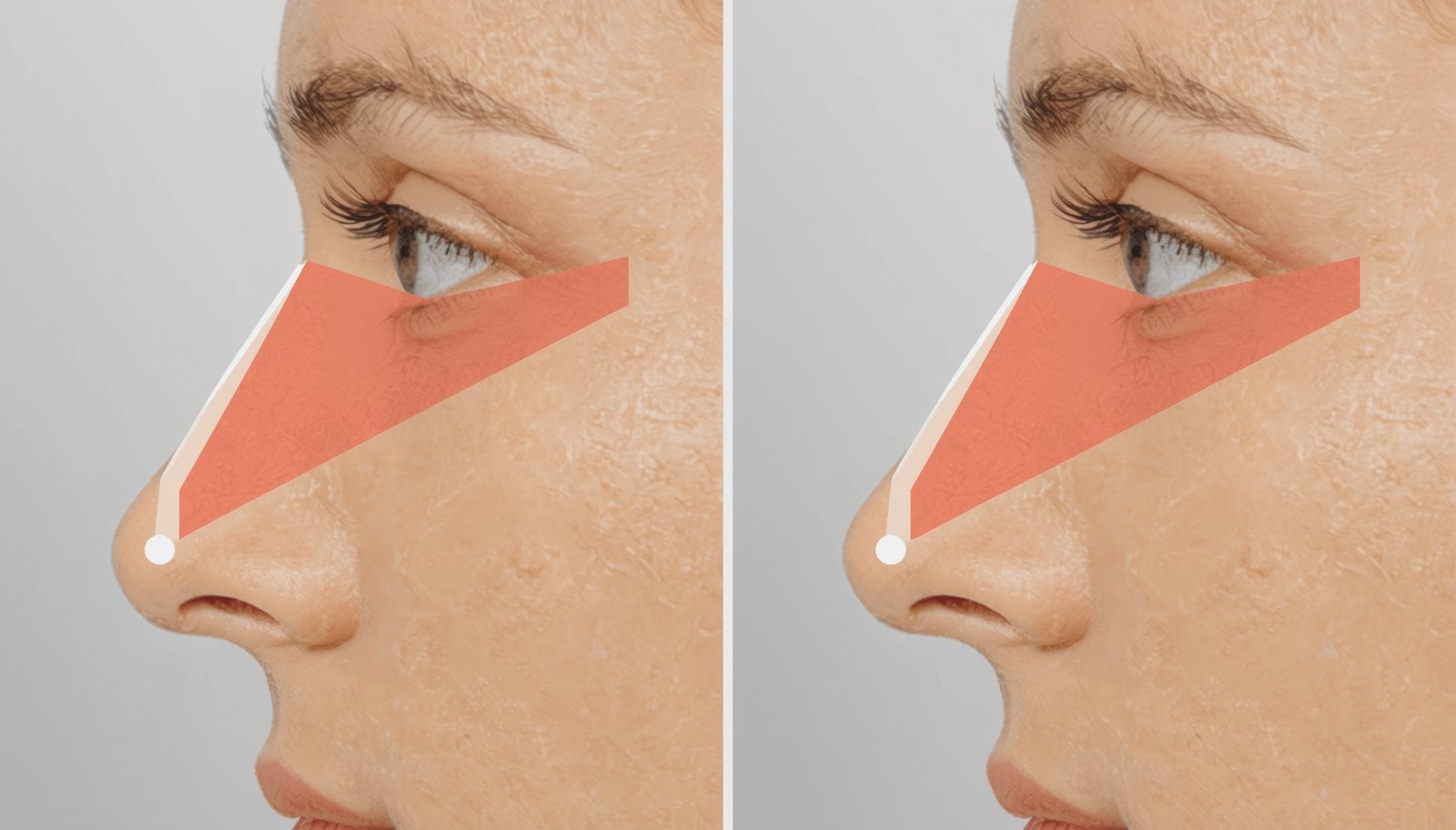
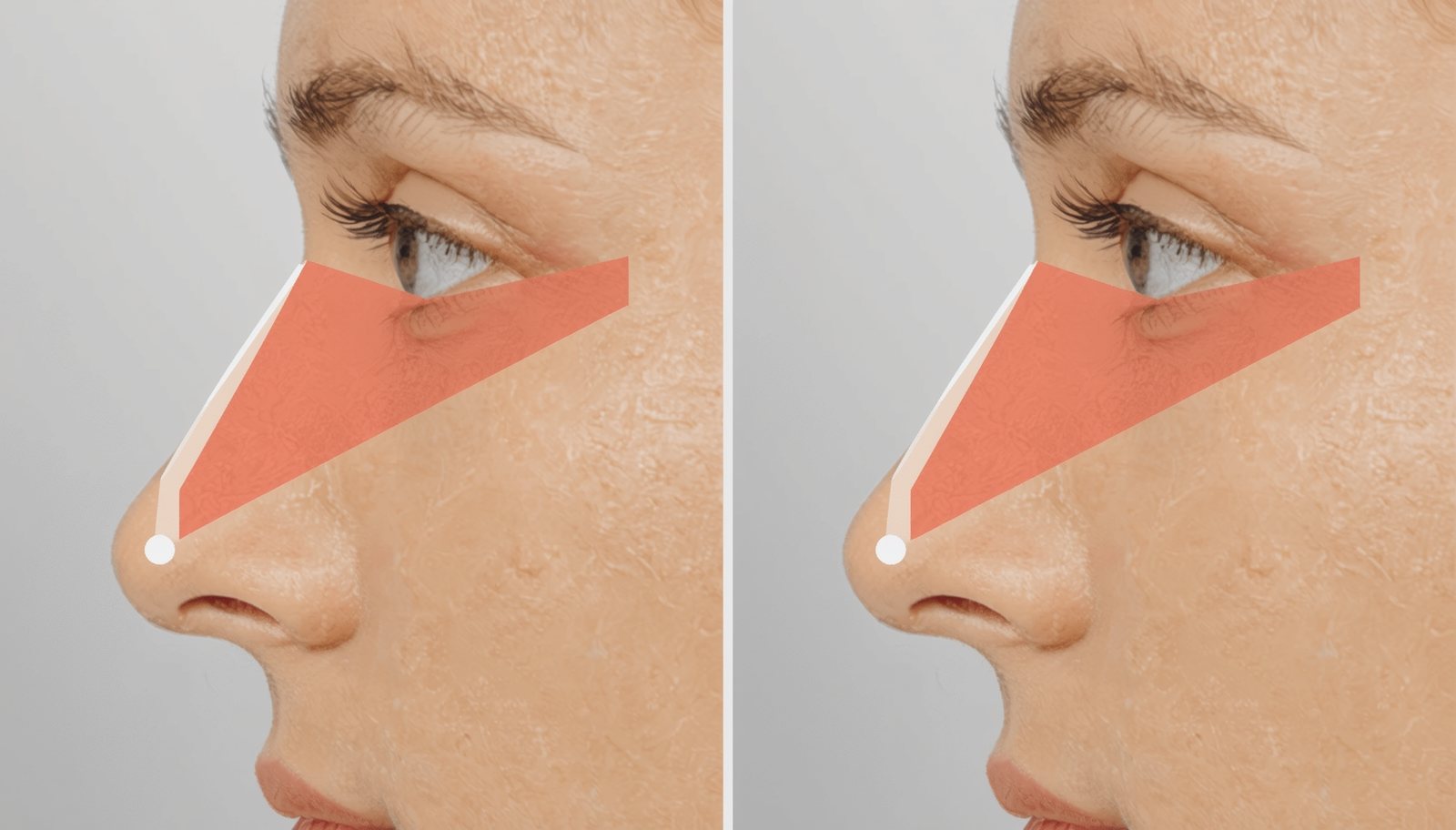
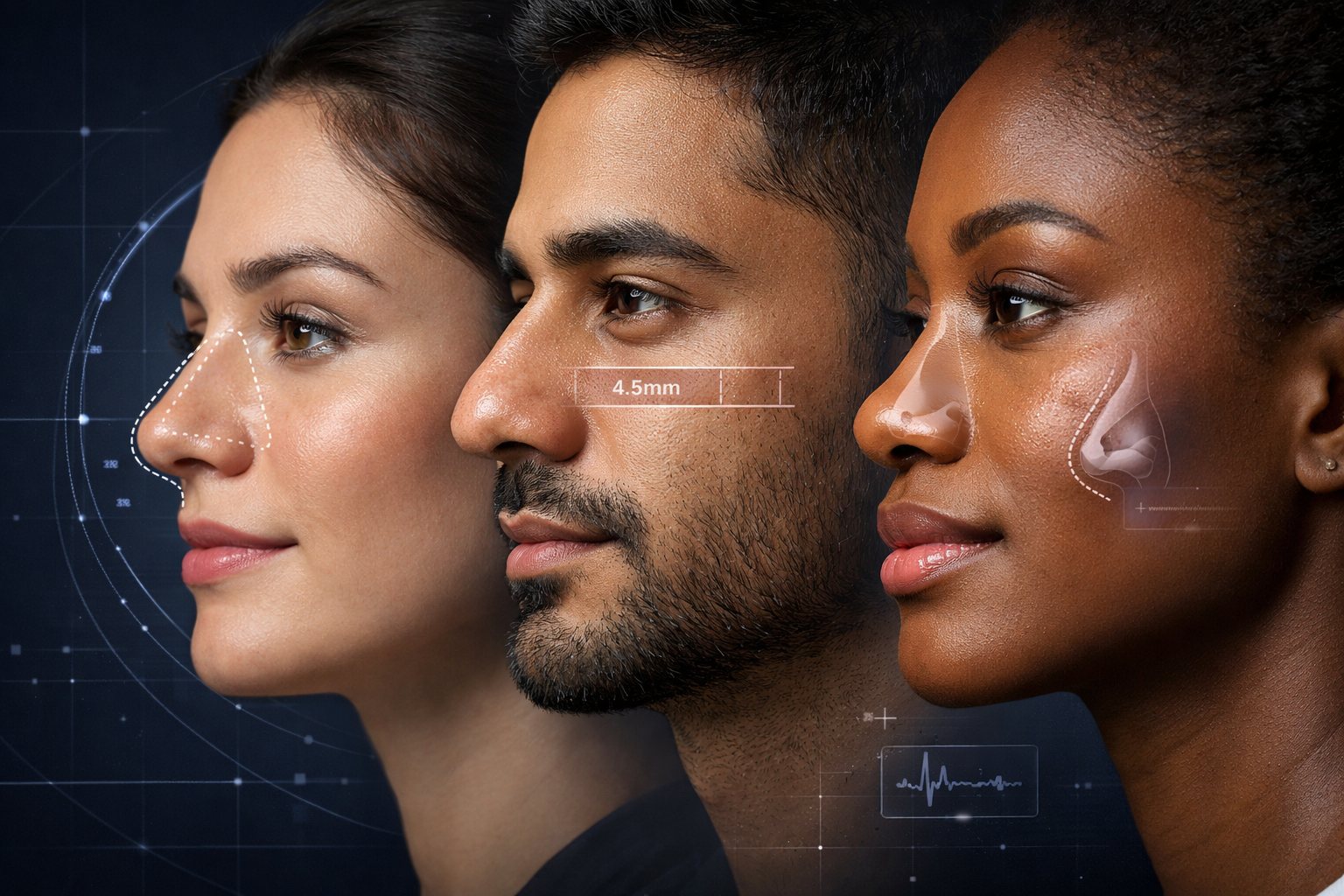
Thick skin typically measures 4-6mm or more (compared to 2-3mm for thin skin) and features abundant sebaceous glands, creating an oily texture. This skin envelope acts like a heavy blanket over the underlying cartilage and bone framework, obscuring fine details and requiring stronger internal structure to achieve visible refinement. The good news? Thick skin provides excellent camouflage for minor irregularities and typically produces very natural-looking results without the operated appearance sometimes seen with thin skin.
Characteristics of Sebaceous Nasal Skin
Sebaceous thick skin has distinct features that influence both surgical planning and outcomes. The abundant oil glands create visible pores, particularly on the nasal tip and supratip area. The dermis itself is thicker, with more collagen and elastin fibers creating a less pliable envelope. The soft tissue layer between skin and cartilage contains more adipose (fat) tissue, further increasing the distance between the structural framework and the visible surface.
This combination means that surgical changes to the underlying skeleton must be more pronounced to translate into visible external improvements. A 2mm reduction that would create obvious change in thin skin might be imperceptible beneath thick skin. Conversely, this thickness provides a protective buffer—minor asymmetries or irregularities that would be glaringly obvious through thin skin remain invisible beneath the thicker envelope.
The vascular supply in thick skin is robust, which promotes excellent healing and low risk of skin necrosis or breakdown. However, this rich vascularity also contributes to more prolonged swelling and slower resolution of edema during the postoperative period.
Preoperative Skin Conditioning: The Accutane Protocol
One of the most significant advances in thick skin rhinoplasty has been the use of low-dose isotretinoin (Accutane) as a preoperative conditioning protocol. This vitamin A derivative dramatically reduces sebaceous gland size and activity, effectively thinning the skin envelope by 20-30% over several months of treatment.
The typical protocol involves 10-20mg daily for 3-6 months before surgery, significantly lower than the doses used for severe acne treatment. This lower dosing minimizes side effects (dryness, sensitivity) while still achieving the desired reduction in sebaceous activity. The result is skin that drapes more effectively over the refined framework, revealing more definition post-surgically.
This approach is particularly beneficial for patients with extremely oily skin or those who have previously undergone rhinoplasty elsewhere with disappointing definition. However, patients must complete the Accutane course and wait at least one month after discontinuation before surgery to ensure optimal healing, as isotretinoin can impair wound healing if still active in the system.
Alternative preoperative conditioning includes topical retinoids (tretinoin/Retin-A), which offer more modest benefits without systemic effects, and sometimes fractional laser treatments to remodel the dermal layer. These adjunctive treatments help optimize the skin envelope for improved post-surgical draping.
Surgical Philosophy: Addition Over Subtraction
The fundamental principle of thick skin rhinoplasty differs dramatically from traditional approaches: add structure rather than remove tissue. While thin-skinned patients may achieve refinement through conservative reduction and precise sculpting, thick-skinned patients require aggressive structural enhancement to create visible change.
This structural approach focuses on building a strong, projecting framework that literally pushes against the heavy skin envelope from within. The goal is creating enough internal projection and definition that it telegraphs through the thick covering, like sculpting a form that's visible even when draped with a heavy cloth.
Cartilage grafting becomes the cornerstone of surgery rather than an occasional adjunct. Surgeons commonly harvest cartilage from the nasal septum first, then proceed to the ear (conchal cartilage) or even rib (costal cartilage) if more substantial grafting is needed. This grafting material is used to build tip projection, create definition, support the middle vault, and reinforce structural weak points.
Tip Refinement Techniques for Thick Skin
The nasal tip presents the greatest challenge in thick skin rhinoplasty, as this is where patients most desire refinement and where thick skin most effectively obscures it. Traditional tip techniques that work well for thin skin—simple suture modifications or minimal cartilage trimming—prove inadequate when working against a heavy skin envelope.
Tip grafting becomes essential. Shield grafts, cap grafts, or infratip lobule grafts strategically placed on top of the lower lateral cartilages create additional projection and definition. These grafts must be substantial enough to create visible change—often 3-4mm thick compared to 1-2mm used in thin skin cases.
Columellar strut grafts provide foundational support, extending between the medial crura (the cartilages forming the columella) to prevent tip droop and maintain projection against the weight of heavy skin. These struts must be robust—carved from septal, conchal, or costal cartilage—to resist the contractile forces of healing thick skin.
Dome suturing techniques bring the tip-defining points closer together, narrowing the tip and increasing definition. In thick skin cases, these sutures must be permanent (non-absorbable) and tensioned adequately to overcome the skin's resistance. Multiple suture techniques may be layered—interdomal sutures narrowing the space between domes, transdomal sutures creating more acute angles, and lateral crural strut grafts reinforcing the alar sidewalls.
Alar base modifications help balance nostril width with refined tip projection. Thick-skinned patients often have wider alar bases that can overwhelm a refined tip, so modest narrowing through alar base excision creates better overall proportion.
Middle Vault and Dorsal Considerations
While the tip commands most attention, the middle third of the nose requires equal consideration in thick skin rhinoplasty. The transition from bony dorsum to cartilaginous middle vault to tip must flow smoothly, creating natural aesthetic lines visible even through thick skin.
When dorsal reduction is needed, surgeons must be cautious about creating an over-reduced appearance where the bridge looks scooped or ski-slope shaped. Thick skin obscures subtle contours, so maintaining a relatively straight profile often produces the most natural result. Excessive reduction can also compromise the internal nasal valve, causing breathing difficulties.
Spreader grafts—thin cartilage strips placed between the septum and upper lateral cartilages—serve multiple functions in thick skin cases. They widen the middle vault preventing valve collapse, create straight dorsal lines, and provide structural continuity from bridge to tip. In thick skin patients, spreader grafts may be more substantial than in thin skin cases, sometimes 2-3mm wide compared to 1-1.5mm typically used.
The supratip area (the region immediately above the tip) requires particular attention in thick skin rhinoplasty. Thick skin naturally creates fullness here, which can produce a pollybeak appearance if not addressed. Techniques include conservative thinning of subcutaneous fat, supratip sutures pulling skin down to the underlying framework, and ensuring adequate tip projection to create appropriate supratip break.
Conservative Defatting: A Delicate Balance
In highly selected cases, surgeons may perform conservative defatting—carefully removing some of the subcutaneous adipose tissue between skin and cartilage. This technique must be approached with extreme caution, as aggressive defatting can compromise blood supply to the skin, risking necrosis (tissue death), poor healing, or visible scarring.
When performed, defatting focuses on the supratip area and nasal tip where thick skin most obscures definition. Surgeons work in the superficial subcutaneous plane, removing only adipose tissue while meticulously preserving the subdermal plexus (the network of blood vessels feeding the skin from below). The amount removed is modest—often just a few millimeters of thickness—but can make the difference between visible and obscured tip definition.
This technique is typically reserved for patients with notably thick soft tissue envelopes and performed only by surgeons with extensive experience in thick skin rhinoplasty, as the margin for error is minimal.
Open vs. Closed Approach in Thick Skin Cases
The debate between open (external) and closed (endonasal) rhinoplasty approaches takes on added significance in thick skin cases. The open approach—involving a small transcolumellar incision and complete elevation of the nasal skin—provides maximum exposure for the extensive structural work typically required in thick skin rhinoplasty.
This visibility allows precise placement of multiple grafts, accurate suture techniques, and assessment of symmetry that's difficult to achieve through limited endonasal access. The trade-off is more extensive dissection potentially increasing postoperative swelling—already a concern in thick skin patients who naturally swell more and longer than thin-skinned patients.
However, many surgeons favor the open approach for thick skin cases specifically because the extensive structural work required—multiple grafts, complex suturing, reinforcement of multiple areas—is simply easier to execute with complete visualization. The transcolumellar scar, when properly placed and closed, becomes virtually imperceptible, even in patients with thick skin.
The Extended Healing Timeline: Managing Expectations
Perhaps the most important aspect of thick skin rhinoplasty is understanding and accepting the prolonged healing timeline. While thin-skinned patients may see 80% of their final result within 3-6 months, thick-skinned patients often require 12-24 months to see similar definition, and subtle refinements may continue for 2-3 years.
This extended timeline reflects the biological reality of thick tissue: more swelling to resolve, more inflammation to subside, more skin contracture to occur. The heavy skin envelope literally takes longer to shrink wrap around the refined framework beneath. Patient after patient reports that their nose continued improving well into the second year post-surgery, with gradual emergence of tip definition they feared would never appear.
This makes preoperative counseling critical. Surgeons must clearly explain these timelines, showing patients that the immediate post-operative appearance—often with minimal visible refinement—does not represent the final outcome. Progress photos at 3, 6, 12, and 24 months help patients appreciate gradual improvements and maintain realistic expectations through the prolonged healing journey.
Postoperative Management: Accelerating Definition
Strategic postoperative interventions can help accelerate swelling resolution and optimize definition in thick skin patients. Corticosteroid injections, typically low-dose triamcinolone, can be carefully administered to areas of persistent fullness, particularly the supratip region. These injections reduce inflammatory response and can noticeably thin areas of stubborn swelling.
Timing and dosage are critical—injections typically begin 3-6 months post-surgery once initial healing is complete, with conservative doses (10mg/mL concentration, small volume) to avoid skin atrophy or contour irregularities. Multiple sessions spaced 4-6 weeks apart may be needed for optimal effect.
Taping protocols help the skin conform to the new framework. Patients tape their nose at night for several months post-surgery, applying gentle compression that encourages skin adherence and discourages fluid accumulation. While the evidence for taping efficacy is largely anecdotal, many surgeons incorporate it into their postoperative protocols with apparent benefit.
Lymphatic massage techniques may help promote drainage and reduce swelling, though patients should receive specific instruction from their surgical team before attempting these maneuvers to ensure they're performed correctly without disrupting healing structures.
Realistic Expectations: What Thick Skin Can and Cannot Achieve
Success in thick skin rhinoplasty requires alignment between patient expectations and anatomical reality. Thick skin noses will never achieve the fine tip definition and delicate contours possible with thin skin. Instead, goals focus on overall proportion, balance, and shape rather than fine details.
Realistic expectations include: improved tip projection creating a more defined profile, better tip rotation correcting drooping, smoother dorsal lines, improved nasal-facial harmony and proportion, and maintained or improved nasal breathing. Thick skin provides natural-looking results that age gracefully without the risk of visible grafts or skeletal irregularities that sometimes occur with thin skin.
Unrealistic expectations include: extremely narrow, pixie-like tips, sharp tip-defining points, and visible tip light reflexes showing through the skin. These features require thin skin to manifest, and pursuing them in thick-skinned patients often leads to disappointing outcomes and frustrated patients.
The best results occur when patients understand their skin type, appreciate its advantages (natural appearance, excellent camouflage), accept its limitations (less fine detail), and choose a surgeon experienced in structural techniques specifically designed for thick skin challenges.
Revision Rhinoplasty in Thick Skin Patients
Thick skin patients are overrepresented among revision rhinoplasty cases, often because their initial surgery employed techniques appropriate for thin skin rather than the structural approach thick skin demands. These patients underwent conservative reductive surgery that worked beautifully in the surgeon's thin-skinned patients but failed to create visible change in their thick skin.
Revision surgery in these cases focuses on adding the structural support that should have been created initially—tip grafts, columellar struts, spreader grafts, and aggressive projection enhancement. However, revision work is complicated by scar tissue, potentially limited cartilage supply if septum was extensively harvested previously, and the psychological burden of undergoing another surgery.
This underscores the importance of choosing a surgeon experienced with thick skin from the outset. Ethnic rhinoplasty specialists and surgeons who specifically highlight thick skin expertise in their practice understand these nuances and employ appropriate techniques during primary surgery, reducing the likelihood of revision needs.
Finding the Right Surgeon for Your Skin Type
The success of thick skin rhinoplasty depends heavily on surgeon selection. Not all rhinoplasty surgeons have equal experience with thick, sebaceous skin, and this expertise gap directly impacts outcomes. During your consultation process, specifically ask about the surgeon's experience with thick skin cases, request before-and-after photos of patients with similar skin characteristics, inquire about their use of structural grafting techniques, and discuss realistic timelines and expectations specific to thick skin.
Advanced AI-powered rhinoplasty matching platforms can identify surgeons with specific expertise in thick skin rhinoplasty, filtering by technical approach (structural vs. reductive), ethnic rhinoplasty experience, and patient skin type specialization. This technology helps ensure you're matched with a surgeon who understands your unique anatomical challenges and has demonstrated success achieving definition in thick-skinned patients.
Conclusion: Embracing Your Skin Type for Optimal Results
Thick, sebaceous skin doesn't represent a limitation—it's simply a different canvas requiring specialized techniques. When approached with appropriate structural methods, realistic expectations, and patience through the extended healing timeline, thick skin rhinoplasty produces beautiful, natural results that enhance facial harmony while maintaining the character and ethnic identity that makes you unique. The key lies in understanding your anatomy, choosing an experienced surgeon, and embracing the journey toward gradual, enduring refinement.