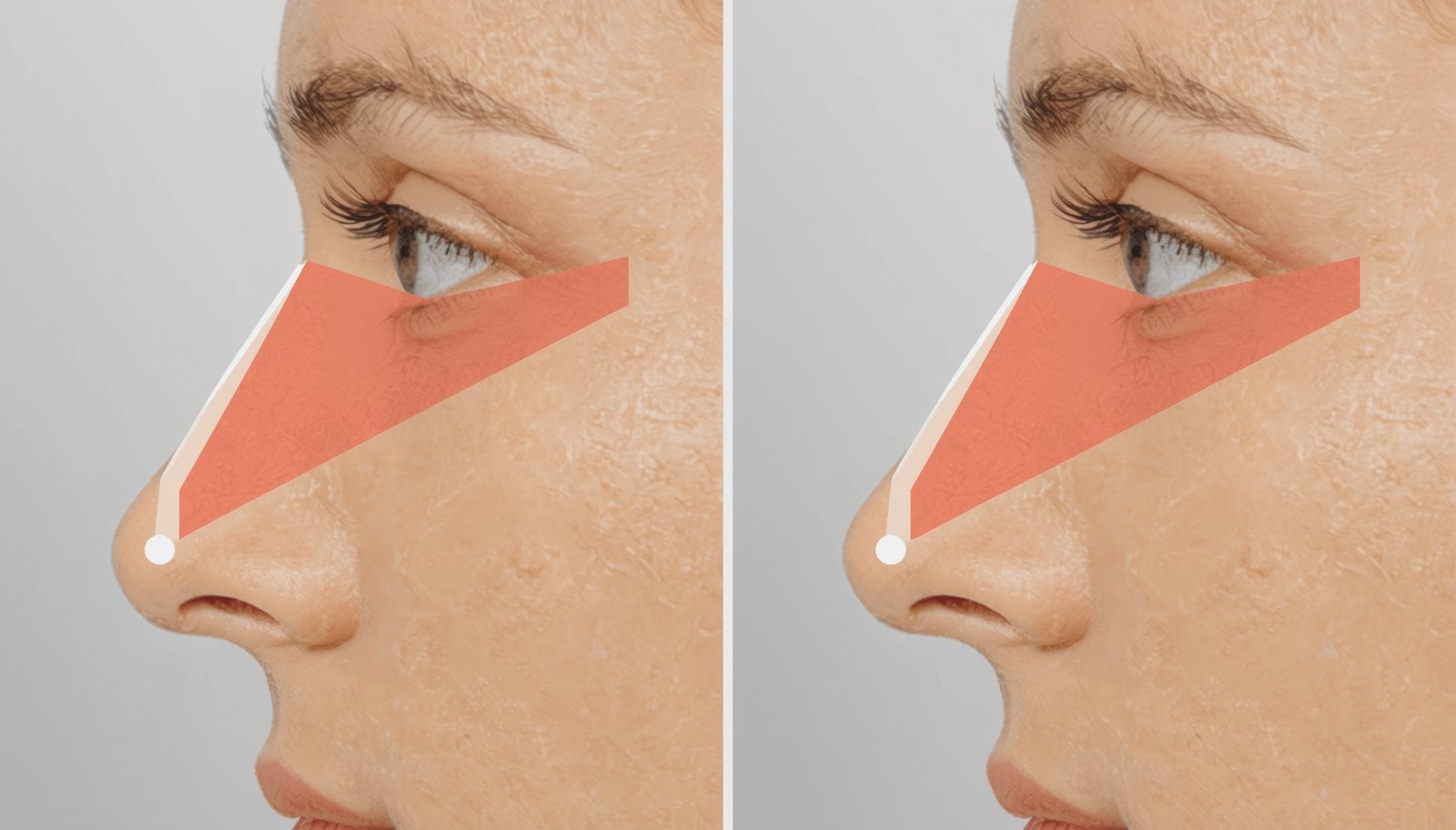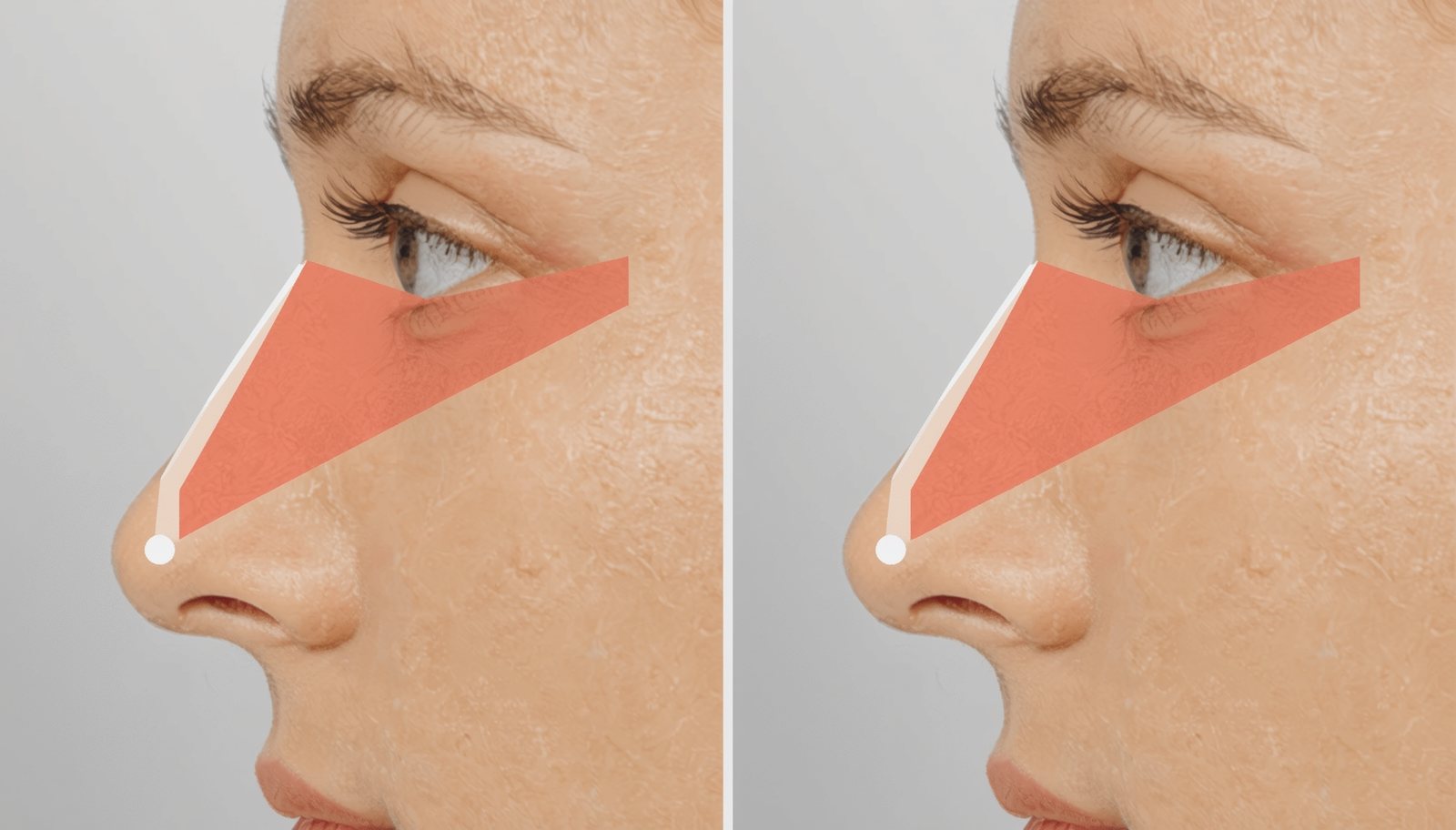
Before-and-after photos are the single most important tool for evaluating a rhinoplasty surgeon's skill. But most patients don't know how to properly analyze these portfolios—and surgeons know it. Strategic lighting, angles, and even digital manipulation can make mediocre results look excellent.
This comprehensive guide teaches you to evaluate rhinoplasty photos like a trained professional, helping you identify truly skilled surgeons and avoid clever marketing disguised as surgical expertise.
Why Before-and-After Photos Matter More Than Credentials
A surgeon can have impressive credentials—board certification, Ivy League training, decades of experience—and still produce poor rhinoplasty results. Why? Because rhinoplasty is as much art as science. Technical knowledge doesn't guarantee aesthetic judgment.
Before-and-after photos reveal:
- Aesthetic sense: Does the surgeon create natural, balanced results or obviously done noses?
- Technical skill: Are results symmetric, well-proportioned, and refined?
- Consistency: Do multiple cases show similar high quality, or is it hit-or-miss?
- Specialization: What types of noses does this surgeon excel at?
- Realistic expectations: What can YOU reasonably expect based on similar cases?
Credentials tell you a surgeon is qualified. Photos show you if they're good.
The Anatomy of Authentic Before-and-After Photos
Standard Views You Must See
A complete rhinoplasty portfolio should include four standard views for every case:
- Front view: Shows width, symmetry, and overall balance
- Left profile: Reveals dorsal line, tip projection, and nasolabial angle
- Right profile: Confirms consistency (noses can be asymmetric)
- Base view: Shows nostril shape, tip definition, and alar positioning
Optional but valuable:
- Three-quarter views: Shows how the nose looks during normal conversation angles
- Smiling photos: Reveals how the nose behaves with facial movement (critical for tip dynamics)
Red flag: Surgeons who only show one or two angles are hiding something. Incomplete portfolios suggest cherry-picking flattering views.
Consistent Lighting and Conditions
Authentic photos have:
- Identical lighting in before and after shots (same position, intensity, color temperature)
- Neutral background (solid color, no distractions)
- Same distance from camera (consistent framing)
- Similar facial expression (neutral or matching smile)
- Minimal makeup in before shots, similar level in after
Manipulative tactics to watch for:
- Harsh overhead lighting in before creating unflattering shadows, soft diffused lighting in after
- Different facial expressions (serious before, smiling after) to exaggerate improvement
- Makeup or contouring in after photos that wasn't in before
- Different camera angles or distances making size comparison impossible
- Heavy filters or editing in after photos
Pro tip: If lighting or conditions differ significantly, the photos are designed to sell, not inform. Move on to more honest surgeons.
How to Detect Photo Manipulation and Editing
Digital manipulation is more common than you think. Some surgeons subtly enhance results, while others engage in outright fraud. Here's how to spot it:
Digital Editing Red Flags
- Blurred or soft focus in after photos (hiding irregularities)
- Inconsistent skin texture between before and after (suggesting smoothing filters)
- Unnaturally perfect symmetry in after photos (digital warping)
- Background distortions around the nose edge (poor cloning or warping)
- Lighting that defies physics (highlights in impossible positions)
- Metadata inconsistencies (if you can access it, edited photos often show multiple save dates)
Strategic Photography Tricks
Even without Photoshop, clever photography can deceive:
- Angling the camera slightly downward in after photos makes noses appear smaller
- Tilting the head can hide residual asymmetry or bumps
- Using longer focal lengths (telephoto) flattens features, making noses look less projected
- Adjusting brightness/contrast can minimize shadows that reveal contour irregularities
How to combat this: Ask surgeons for unedited, patient-taken photos in addition to professional studio shots. Patient photos from smartphones, taken in natural lighting, often reveal reality better than professional photography.
Analyzing Results: What to Look For
1. Natural Appearance and Balance
Excellent rhinoplasty results look like the patient was born with that nose—no obvious signs of surgery.
Evaluate:
- Facial harmony: Does the nose fit the face, or does it look stuck on?
- Proportionality: Is the nose size appropriate for facial width and height?
- Smoothness: Are dorsal lines smooth without visible bumps, steps, or indentations?
- Tip refinement: Is tip definition appropriate (not overly pinched or still bulbous)?
- Nostril appearance: Symmetric, natural shape, not distorted or scarred
Warning signs:
- Cookie-cutter appearance: All noses look identical regardless of patient face
- Over-rotated tips (pig nose appearance)
- Scooped or scooped bridges (overly concave profile)
- Pinched tips (inverted-V deformity or overly narrow)
- Visible asymmetry or irregularities
2. Functional Indicators
Photos can't directly show breathing, but experienced observers can spot potential functional problems:
- Overly narrow middle vault suggests possible internal valve collapse
- Collapsed alar rims indicate external valve weakness
- Excessive tip rotation can compromise nostril airflow
- Severe dorsal reduction may lead to saddle nose or breathing issues
If aesthetic results look extreme, question whether function was preserved.
3. Consistency Across Cases
One or two spectacular results might be luck. Consistent quality across dozens of cases proves skill.
What to assess:
- Do most cases show similar level of refinement?
- Are there any obviously poor results in the portfolio?
- Does quality hold across different nasal types (thick skin, ethnic, revision)?
- Is there variety in results, or does every nose look identical?
Red flag: A surgeon with 15+ years of experience who only shows 10-15 cases is hiding the rest. Expect to see 50-100+ cases minimum for established surgeons.
4. Relevant Skin Type and Ethnicity
This is critical but often overlooked. Surgical techniques that work for thin-skinned Caucasian noses often fail on thick-skinned Middle Eastern, Hispanic, African, or Asian noses.
Find cases matching YOUR characteristics:
- Skin thickness: Thick skin requires different approaches than thin skin
- Ethnicity: Different ethnic groups have distinct nasal structures
- Age: Older skin behaves differently than younger skin
- Gender: Male and female rhinoplasty goals differ
A surgeon might have a perfect portfolio of thin-skinned European noses—but if you have thick Middle Eastern skin, those results tell you nothing about your likely outcome.
Innovation spotlight: RhinoMatch's AI automatically filters portfolios to show ONLY cases matching your skin type, ethnicity, and anatomical concerns—saving you hours of manual searching.
Finding Cases Similar to Your Nose
The most valuable before-and-after photos are those that resemble YOUR nose before surgery.
Identify Your Primary Concerns
Common rhinoplasty concerns include:
- Dorsal hump (bump on bridge)
- Bulbous tip (wide, round tip)
- Drooping tip (ptotic tip pointing downward)
- Wide nasal bridge
- Wide nostrils (alar base width)
- Asymmetry
- Nasal deviation (crooked nose)
- Saddle nose (collapsed bridge)
- Upturned tip (overly rotated)
- Hooked nose (curved dorsum with drooping tip)
Identify your top 2-3 concerns, then search the surgeon's portfolio for patients with the same issues.
Manual Searching vs. AI-Powered Matching
Manual approach:
- Spend 2-3 hours per surgeon reviewing 50-100 cases
- Try to remember which cases looked like yours
- Difficult to compare across multiple surgeons
- Easy to miss relevant cases or be swayed by impressive but irrelevant results
RhinoMatch AI approach:
- Upload your photos
- AI analyzes your anatomy in seconds
- Automatically finds surgeons with proven success on your nasal type
- Shows you 5-10 most relevant before-and-after cases per surgeon
- Compare results across 50+ surgeons in minutes
The difference is like having a team of rhinoplasty experts analyze thousands of cases on your behalf—versus trying to do it alone with no training.
Setting Realistic Expectations
Before-and-after photos should inform your expectations, not create fantasy goals.
Understand Limitations Based on Anatomy
- Thick skin limits tip definition—you won't achieve the same refinement as thin-skinned patients
- Weak cartilage limits how much structure can be removed
- Ethnic features may not be able to achieve Eurocentric ideals without looking unnatural
- Revision cases have compromised tissue and blood supply—expectations should be adjusted
Honest surgeons will show you realistic cases and explain why certain results aren't achievable for your anatomy. Surgeons who promise anything you want are either lying or unskilled.
The Wish Photo Approach
Many patients bring wish photos of celebrity noses they admire. This can be helpful, BUT:
- Your bone and cartilage structure determines what's possible
- A nose that looks beautiful on one face may look wrong on yours
- Surgeons can't transplant someone else's nose onto your face
Better approach: Use wish photos to communicate aesthetic preferences (I like this refined tip or I want this smooth profile) rather than demanding exact replication.
Then, focus on before-and-after cases of patients with anatomy similar to yours who achieved results you find appealing.
Questions to Ask About Portfolio Photos
During consultations, ask:
- Can I see 10-15 cases with nasal anatomy similar to mine?
- Do you have cases with my skin type and ethnicity?
- Can I see some of your less-than-perfect results and what went wrong?
- Are these photos professionally shot or patient-submitted?
- Have these photos been edited or filtered?
- Can I see long-term results (1-2 years post-op)?
- May I contact any of these patients?
Hesitation or defensiveness is a red flag. Confident surgeons willingly share comprehensive portfolios.
The Power of AI-Powered Portfolio Analysis
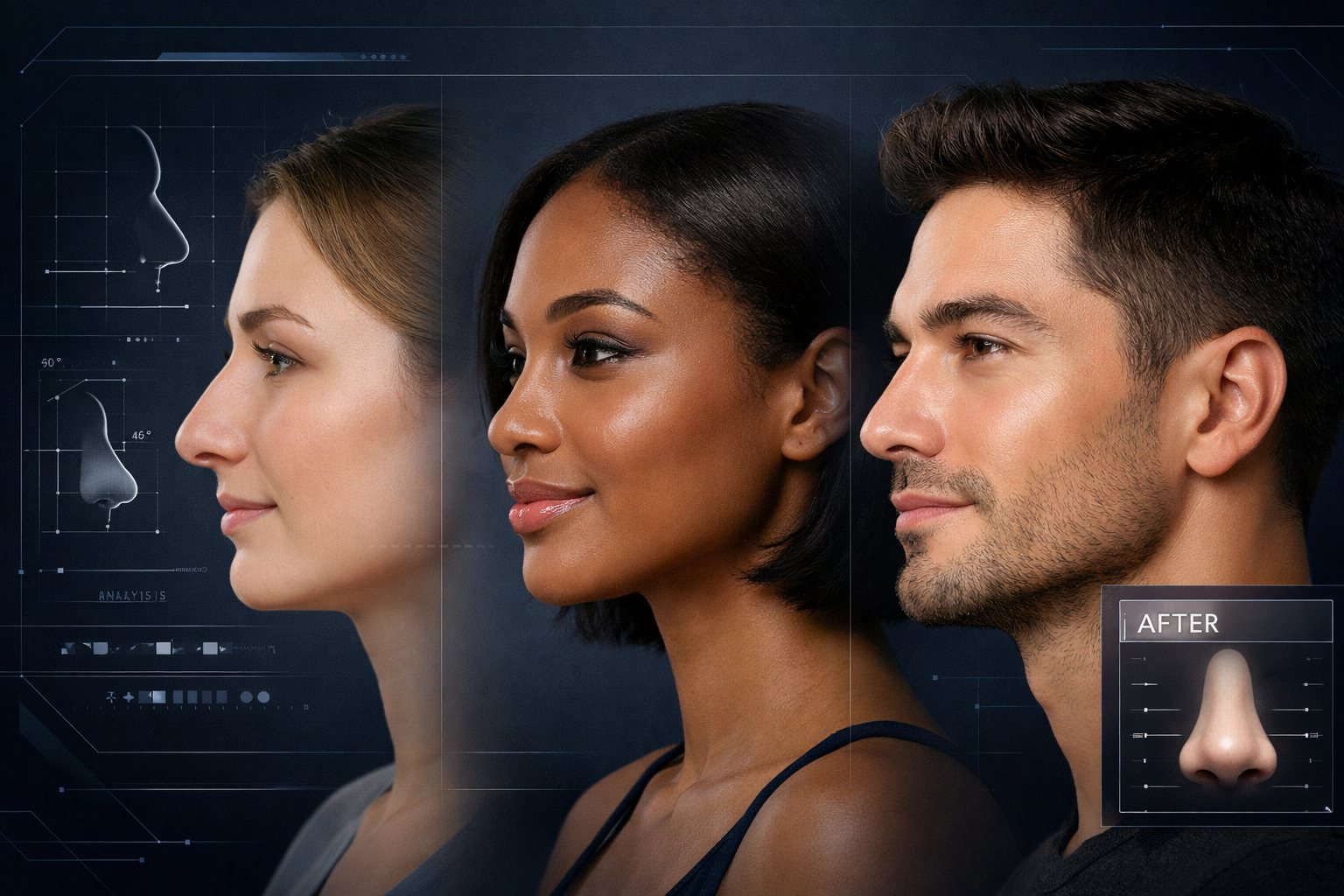
Manually analyzing rhinoplasty portfolios is time-consuming and requires expertise most patients don't have. RhinoMatch's AI changes this entirely.
How RhinoMatch Analyzes Portfolios
- Computer vision identifies anatomical features in every before-and-after photo
- Pattern recognition matches your anatomy to similar cases in surgeon portfolios
- Quality assessment evaluates symmetry, smoothness, and proportion in results
- Consistency scoring measures how reliably surgeons achieve good outcomes
- Specialization detection identifies which nasal types each surgeon excels at
The result: Instead of spending 20 hours manually reviewing portfolios, you get data-driven recommendations in minutes—complete with visual examples of results you can realistically expect.
Benefits Over Manual Analysis
- Objectivity: AI isn't swayed by impressive but irrelevant cases
- Comprehensiveness: Analyzes hundreds of cases per surgeon, not just the highlighted ones
- Accuracy: Identifies subtle anatomical matches you might miss
- Efficiency: Saves 15-20 hours of research time
- Confidence: Data-driven recommendations reduce decision anxiety
Red Flags: When to Walk Away
Certain portfolio characteristics should immediately disqualify a surgeon:
- Fewer than 20-30 cases shown (for established surgeons)
- Only one angle shown (hiding poor results from other views)
- Obvious photo manipulation (filters, warping, inconsistent lighting)
- No cases similar to your anatomy
- Results look unnatural or cookie-cutter
- Unwillingness to show less-than-perfect results
- No long-term photos (1+ years post-op)
- Generic stock photos or stolen images (reverse image search can detect this)
Your safety and satisfaction are too important to overlook red flags.
Beyond Photos: Complementary Evaluation Methods
While before-and-after photos are essential, combine them with:
- Patient reviews (look for patterns about results quality)
- Video testimonials (harder to fake than written reviews)
- In-person consultations (see actual patients in the waiting room)
- Surgical video demonstrations (shows actual technique)
- Revision rate transparency (honest discussion of complications)
A comprehensive evaluation combines visual portfolio analysis with reputation research and personal interaction.
Your Checklist for Portfolio Evaluation
Before committing to a surgeon, ensure:
- ☑ You've seen 20+ cases from multiple angles
- ☑ At least 5-10 cases match your specific anatomy
- ☑ Results look natural and age-appropriate
- ☑ Photos use consistent lighting and aren't heavily edited
- ☑ Long-term results (1+ years) are available
- ☑ Portfolio shows variety (not all identical noses)
- ☑ Quality is consistent across many cases
- ☑ Surgeon can explain their approach to cases like yours
- ☑ You've compared this portfolio to 3-5 other surgeons
- ☑ Your gut feeling says yes, I trust this surgeon's aesthetic sense
Conclusion: Let Data Guide Your Decision
Before-and-after photos are your window into a surgeon's skill, aesthetic sense, and specialization. Learning to properly evaluate these portfolios—or using AI tools that do it for you—is the difference between choosing a surgeon who's right for your unique case and gambling with your appearance.
Don't rely on credentials alone. Don't trust marketing hype. Trust proven results on anatomy like yours.
RhinoMatch's AI-powered portfolio analysis takes the guesswork out of surgeon selection, showing you exactly which surgeons have the track record to deliver the results you want. Stop spending weeks analyzing photos manually—let technology do the heavy lifting while you focus on preparing for your transformation.