Arnica and bromelain are often recommended as though they are standard answers to post-rhinoplasty bruising. The evidence is less tidy. Some studies report a benefit in selected settings, while others do not show a meaningful difference. The practical question is not whether a supplement is popular, but whether its potential benefit, timing, and interaction risks have been reviewed as part of your own surgical protocol.
Why bruising happens in the first place
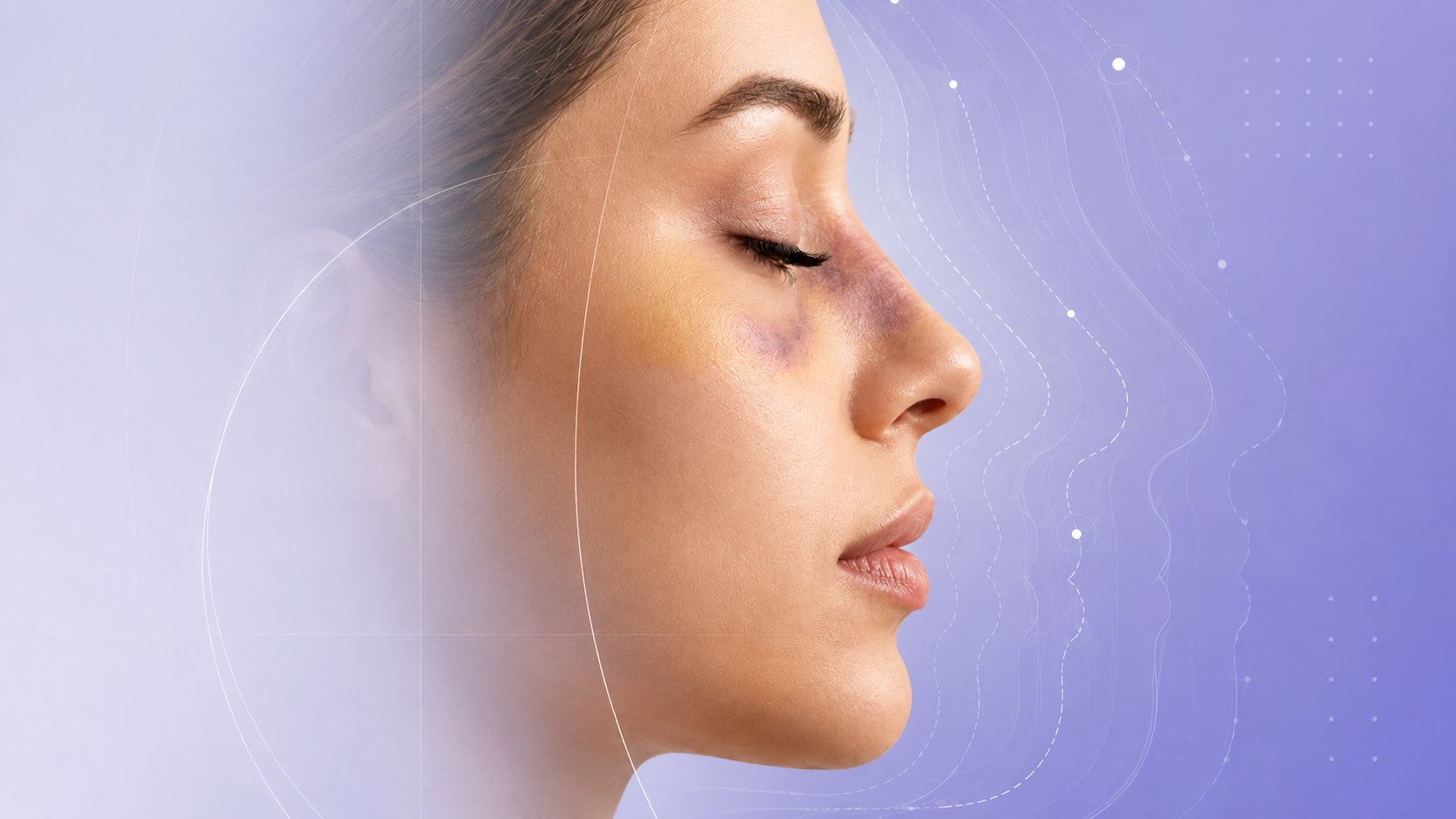
Bruising after rhinoplasty results from small blood vessels near the surgical site being disrupted during bone and cartilage work, allowing blood to collect under the skin. For many patients this is simply part of healing rather than a sign anything went wrong, though how much bruising develops varies considerably based on individual factors and the specific technique used.
What the evidence on arnica actually shows
Arnica montana is recommended by some surgeons as part of a broader recovery protocol, but the research behind it is mixed rather than conclusive. Some studies suggest a possible reduction in bruising in certain surgical contexts; others, particularly involving different types of facial procedures, have found no meaningful difference compared to placebo. It isn't accurate to say the benefit is well established or that most surgeons rely on it, a fairer description is that some surgeons include it as an optional addition, based on evidence that remains inconsistent.
What the evidence on bromelain actually shows
Bromelain, an enzyme derived from pineapple stems, has some studies suggesting a possible effect on swelling specifically, alongside other studies finding no meaningful benefit. It also has a genuinely relevant property worth knowing about in its own right: it can affect blood clotting. That means its use, including timing relative to surgery, needs to be discussed with your surgical team rather than started independently, taking it at the wrong time could theoretically add to bleeding risk rather than help with bruising.
Practical measures commonly included in surgical protocols
Alongside the more uncertain evidence on supplements, a few measures show up consistently in surgeon-provided recovery instructions:
Avoiding blood-thinning medications and certain supplements before surgery, exactly as directed by your surgical team
Avoiding alcohol in the days before surgery, as part of your surgeon's specific pre-operative instructions rather than a fixed universal rule
Head elevation during rest and sleep, if recommended by your surgeon
Cold compresses, applied only as specifically approved by your surgical team, often without direct pressure on the surgical site unless instructed otherwise
None of these guarantee an absence of bruising. They're supportive measures with a clearer general rationale than the supplement evidence, not a formula that eliminates bruising altogether.
Why individual variation is substantial
Some people bruise more easily than others, shaped by genetics, medication use, and other individual health factors. This means comparing your own bruising to another patient's photos or timeline, including anything you might see online, isn't a reliable way to judge whether your recovery is on track. Bruising severity depends on far more than adherence to any particular supplement protocol.
A word on supplement safety generally
Supplements aren't automatically risk-free just because they're available without a prescription. They can interact with medications, allergies, or other health conditions in ways that aren't always obvious. Any supplement plan for surgery is worth reviewing with your surgical team rather than assumed to be safe by default because it's sold over the counter.
Why marketing around these supplements can be misleading
It's worth being aware that arnica and bromelain are sold specifically as "bruise minimizing" or "recovery support" products, often with confident claims on the packaging that go well beyond what the underlying research actually supports. A product being marketed toward surgical patients doesn't mean its benefit has been established for that specific use, packaging claims and clinical evidence are two different things, and it's reasonable to bring a healthy amount of skepticism to either one.
Separate three different things: evidence, protocol, and marketing
A product can be heavily marketed to surgical patients without having strong evidence for rhinoplasty specifically. A surgeon may still include it in a protocol based on experience, patient preference, or a limited evidence base. Those are not the same claim. When you hear that a supplement "reduces bruising," ask whether that statement comes from clinical research, the clinic's routine, or the product's own packaging. Keeping those categories separate makes the decision clearer and helps prevent an optional supplement from being treated as essential care.
What matters most
Neither arnica nor bromelain has strong, consistent evidence behind it, and neither should be treated as an automatic, low-risk addition to your recovery plan. If your surgeon specifically recommends either as part of your protocol, that guidance takes priority over general information like this. The steps with clearer rationale, medication timing, avoiding alcohol, head elevation, matter more for your actual bruising outcome than any single supplement choice.
What to record before discussing supplements A few practical questions about bruising and supplements
Make a complete list of anything you take regularly or occasionally, including prescription medication, over-the-counter products, vitamins, herbal products, powders, and recovery supplements. Note the dose when you know it and how often you take it. This creates a clearer conversation than asking only whether arnica or bromelain is allowed. It also helps the surgical team consider the whole picture rather than reviewing one product in isolation. Do not assume that a familiar product is irrelevant because it is sold without a prescription. The useful question is whether it fits your full medication and health profile at the time of surgery.
A few practical questions about bruising and supplements
Does arnica reliably prevent bruising after rhinoplasty?
The evidence is mixed. Some studies suggest a possible benefit in selected settings, while others do not show a meaningful difference. It should not be treated as a guaranteed or universally recommended solution.
Is bromelain harmless because it is a supplement?
No. Bromelain can affect blood clotting, so the timing and suitability of using it should be discussed with the surgical team rather than decided independently.
Is bruising itself a sign that something went wrong?
Bruising is common after bone and cartilage work and varies considerably between patients. A change in direction, such as worsening pain, spreading redness, or new swelling, is more concerning than bruising alone.
What tends to matter more than a single recovery supplement?
Following medication instructions, avoiding unapproved supplements, using cold compresses only as directed, and keeping the head elevated when advised have a clearer practical role than relying on one product to prevent bruising.
Why do two patients bruise so differently after similar surgery?
Genetics, medication use, individual health factors, the amount of surgical work, and technique can all affect bruising. Another patient's recovery photographs are therefore a poor benchmark for your own.
What matters more than a supplement
Bruising cannot be reduced to one capsule or one preparation trick. Medication review, surgeon-directed aftercare, and individual healing patterns matter more than confident packaging claims. Do not start a supplement around surgery without checking it with the team managing your care.