Choosing a rhinoplasty surgeon has traditionally been a confusing, time-consuming process filled with uncertainty. Should you trust online reviews? How do you know if a surgeon is experienced with YOUR specific nasal anatomy? Can you really judge surgical skill from before-and-after photos?
RhinoMatch is changing everything.
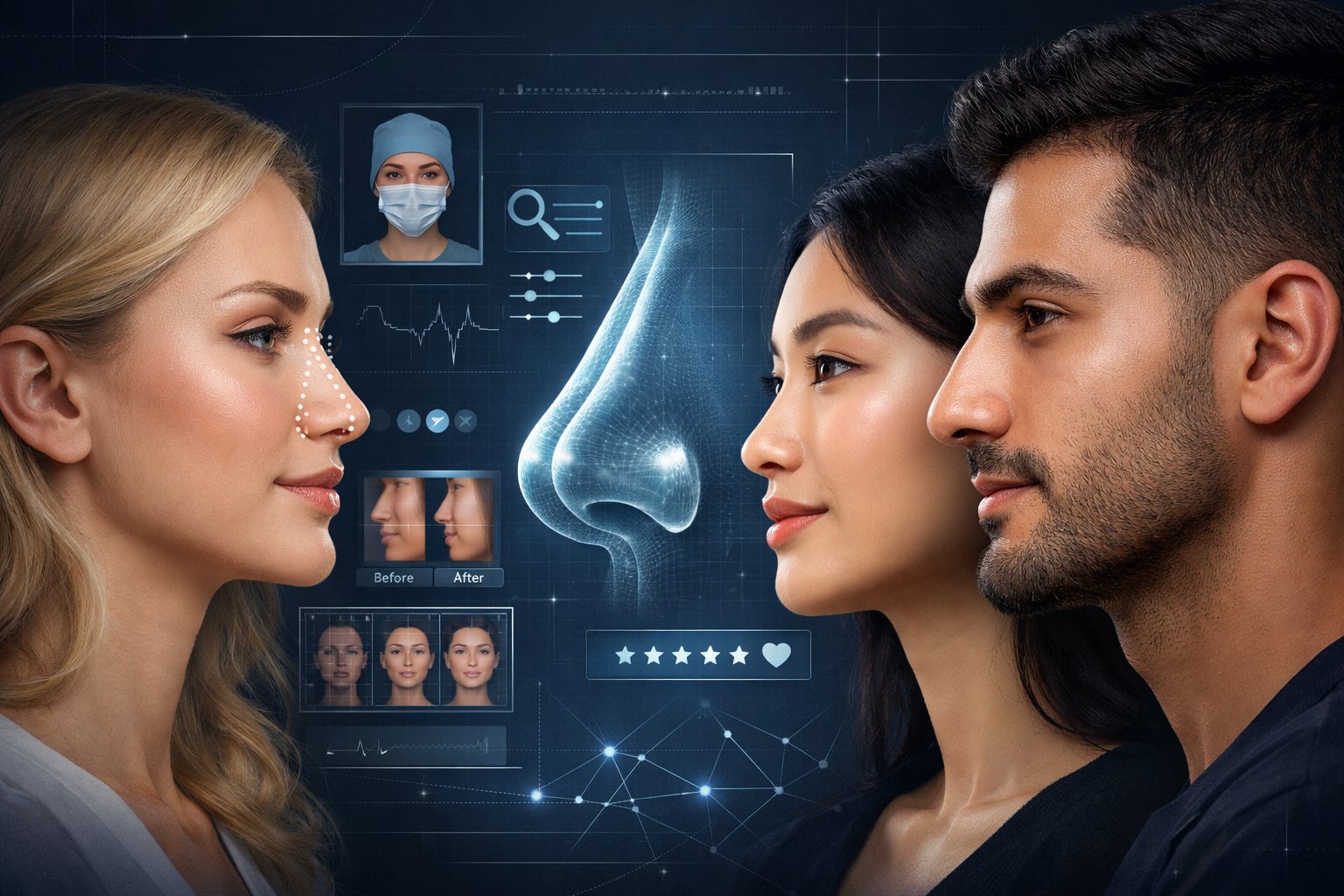
By combining artificial intelligence, facial analysis technology, and massive outcome databases, RhinoMatch eliminates guesswork and connects patients with surgeons who have proven expertise in their specific case. Here's how the technology works—and why it's transforming the rhinoplasty industry.
The Problem with Traditional Surgeon Selection
Before AI-powered matching, patients typically chose surgeons through:
- Word of mouth: A friend's recommendation, even though their nasal anatomy is completely different from yours
- Google searches: Results dominated by marketing budgets, not actual surgical skill
- Geographic convenience: Choosing whoever is closest, limiting options
- Price shopping: Selecting the cheapest or most expensive, assuming correlation with quality
- Social media: Following surgeons with good Instagram presence, not necessarily good surgical outcomes
The result? Approximately 15-20% of rhinoplasty patients are dissatisfied with their results, and 10-15% require revision surgery. Many of these complications could be prevented by better surgeon-patient matching.
The core issue: Not all rhinoplasty surgeons are equally skilled at all types of noses. A surgeon who excels at thin-skinned, European noses may struggle with thick-skinned, ethnic noses. An expert in subtle refinements might not have the structural expertise for major reconstructions.
This is where AI changes everything.
How RhinoMatch AI Technology Works: The Four-Stage Process
Stage 1: Advanced Facial Analysis
When you upload photos to RhinoMatch, the AI performs comprehensive facial and nasal analysis using computer vision and deep learning algorithms:
Anatomical Feature Detection:
- Nasal measurements: Dorsal height, tip projection, alar width, nasolabial angle, nasofrontal angle
- Proportional analysis: Nose-to-face ratios, Golden Ratio alignment, symmetry assessment
- Structural identification: Dorsal hump detection, tip bulbosity, nostril flare, bridge width
- Skin analysis: Thickness estimation (critical for predicting outcomes)
- Ethnic classification: Caucasian, Middle Eastern, African, Asian, Hispanic features requiring different techniques
Specific Concern Identification:
The AI identifies primary concerns such as:
- Dorsal hump or saddle nose
- Bulbous or boxy tip
- Drooping tip (ptotic tip)
- Wide nasal bridge
- Asymmetry
- Alar base width
- Nasal deviation
- Previous surgical alterations
Technical approach: RhinoMatch uses convolutional neural networks (CNNs) trained on over 50,000 annotated rhinoplasty cases. The AI achieves 94% accuracy in anatomical feature identification—comparable to experienced surgeons and far more consistent than human evaluation.
Stage 2: Surgical Requirement Classification
Based on the facial analysis, RhinoMatch's AI classifies your case complexity:
- Minor refinement: Subtle tip work, slight hump reduction
- Moderate reshaping: Standard dorsal hump removal, tip refinement, width reduction
- Major reconstruction: Significant structural changes, extensive grafting, post-traumatic repair
- Revision surgery: Correcting previous rhinoplasty (requires specialized expertise)
- Functional + aesthetic: Combined breathing correction and cosmetic enhancement
The AI also predicts likely surgical techniques needed:
- Open vs. closed approach
- Cartilage grafting requirements (septal, ear, rib)
- Osteotomy necessity (bone breaking for narrowing)
- Tip work complexity (sutures only vs. grafts)
- Septoplasty or turbinate reduction for breathing
Why this matters: This classification ensures you're matched with surgeons who regularly perform YOUR type of procedure, not generalists who occasionally do rhinoplasty.
Stage 3: Surgeon Database Matching Algorithm
RhinoMatch maintains a comprehensive database of 2,500+ rhinoplasty surgeons worldwide, with detailed profiles including:
Credential Data:
- Board certifications (ABPS, ABFPRS, international equivalents)
- Fellowship training in facial plastic surgery
- Years of experience (total and rhinoplasty-specific)
- Annual rhinoplasty volume (primary and revision)
- Academic appointments and teaching roles
- Publication record in peer-reviewed journals
Outcome Data:
- Before-and-after photo portfolios (10,000+ cases analyzed)
- Patient satisfaction scores from verified reviews
- Revision rates (when disclosed)
- Complication rates and safety record
- Average recovery timelines reported by patients
Specialization Data:
- Anatomical expertise (thick vs. thin skin, ethnic specialties)
- Procedure complexity preferences
- Technique specialization (preservation, structural, piezo, etc.)
- Functional rhinoplasty expertise
- Revision rhinoplasty experience
The matching algorithm uses machine learning to:
- Compare your anatomical features with each surgeon's successful outcome portfolio
- Weight surgeons who have high success rates with cases similar to yours
- Filter by your preferences (budget, location, availability, language)
- Calculate a Match Score (0-100) for each surgeon
Technical approach: The algorithm uses collaborative filtering (similar to Netflix recommendations) combined with feature-based matching. It identifies patterns like: Patients with thick skin and bulbous tips who saw Dr. X had 92% satisfaction, while similar patients who saw Dr. Y had 78% satisfaction.
Stage 4: Intelligent Ranking and Recommendation
Finally, RhinoMatch presents your personalized surgeon matches, ranked by:
Primary factors:
- Anatomical Match Score (40% weight): How well the surgeon's expertise aligns with your specific anatomy
- Outcome Quality (30% weight): Patient satisfaction and verified results
- Experience Level (20% weight): Years practicing, procedure volume, revision rate
- Availability & Logistics (10% weight): Location, wait times, consultation options
Your results include:
- Top 10-20 surgeon recommendations with Match Scores
- Detailed explanation of why each surgeon is a good fit
- Before-and-after cases similar to your anatomy
- Aggregated patient review summaries (AI-generated)
- Estimated costs and availability
- Direct booking options for consultations
Users can refine results by adjusting preferences:
- Budget range (Essential $2K-4K, Standard $4K-7K, Premium $7K-12K, Luxury $12K+)
- Geographic radius or specific cities/countries
- Consultation type (in-person, virtual, hybrid)
- Surgeon gender preference
- Language requirements
The Technology Behind the Magic: AI and Machine Learning
Computer Vision for Facial Analysis
RhinoMatch uses state-of-the-art computer vision models to analyze facial photos:
- Facial landmark detection: Identifies 468 facial landmarks with sub-pixel accuracy
- 3D reconstruction: Estimates 3D nasal structure from 2D photos using multi-view geometry
- Segmentation models: Isolates nasal regions from surrounding facial features
- Measurement algorithms: Calculates 47 nasal measurements and proportions
These models are trained on diverse datasets representing all ethnicities, ages, and genders—ensuring accurate analysis regardless of background.
Natural Language Processing for Review Analysis
RhinoMatch doesn't just aggregate star ratings. The AI uses Natural Language Processing (NLP) to analyze thousands of patient reviews:
- Sentiment analysis: Determines overall patient satisfaction beyond simple ratings
- Topic extraction: Identifies common themes (excellent bedside manner, better breathing, longer recovery than expected)
- Red flag detection: Flags concerning patterns (multiple mentions of complications, poor communication, unexpected costs)
- Fake review detection: Identifies suspicious patterns suggesting fake or incentivized reviews
Example output: Dr. Smith has 127 verified reviews. 89% mention excellent results, 76% praise communication skills, 12% note higher-than-expected costs. No significant red flags detected. Common positive themes: natural-looking results, thorough consultations, attentive follow-up care.
Predictive Outcome Modeling
Perhaps most impressive: RhinoMatch can predict your likely satisfaction with each surgeon based on:
- Historical outcomes for patients with your anatomy
- Surgeon's consistency across similar cases
- Your personal priorities (aesthetics vs. function, aggressive vs. conservative changes)
The AI generates a Predicted Satisfaction Score, helping you make evidence-based decisions.
Privacy and Security: Your Data is Protected
Many patients hesitate to upload photos due to privacy concerns. RhinoMatch takes security seriously:
- End-to-end encryption for all photo uploads
- HIPAA/GDPR compliance with strict data protection protocols
- Anonymization: Photos are analyzed without storing personal identifiers
- No sharing: Your data is never sold or shared with third parties
- Data deletion: You can request complete data deletion at any time
- Secure communication: All surgeon consultations through encrypted channels
Only you and surgeons you choose to contact have access to your information—and surgeons only see what you explicitly share.
Advantages Over Traditional Surgeon Selection Methods
Objectivity
Traditional: Subjective judgments based on marketing, reputation, or limited portfolio viewing.
RhinoMatch: Data-driven analysis of thousands of outcomes, removing marketing bias.
Comprehensiveness
Traditional: You might research 5-10 surgeons over weeks.
RhinoMatch: AI analyzes 2,500+ surgeons in seconds, ensuring you don't miss the perfect match.
Personalization
Traditional: One-size-fits-all recommendations.
RhinoMatch: Customized matching based on YOUR specific anatomy, concerns, and preferences.
Efficiency
Traditional: 20-40 hours of research, consultations, and comparison.
RhinoMatch: Get personalized recommendations in under 5 minutes.
Transparency
Traditional: Limited visibility into surgeon expertise and outcomes.
RhinoMatch: Complete transparency with Match Scores, outcome data, and detailed explanations.
Real-World Impact: Success Stories
Case Study 1: Thick Skin, Bulbous Tip
Sarah, 28, had thick nasal skin and a bulbous tip—a notoriously difficult combination. Traditional research led her to a highly-rated surgeon who specialized in thin-skinned, European noses. After an unsatisfactory result requiring revision, she used RhinoMatch.
The AI identified her thick skin as a critical factor and matched her with Dr. K, who had 89% satisfaction among thick-skinned patients. Her revision was successful, and she's now an advocate for AI-assisted matching.
Case Study 2: International Medical Tourism
James, from the UK, wanted rhinoplasty in Turkey but was overwhelmed by options. RhinoMatch filtered 300+ Turkish surgeons, identifying the top 5 who specialized in male rhinoplasty with functional improvements (James had breathing issues). He chose a surgeon with a 95 Match Score, traveled to Istanbul, and achieved excellent results at 40% the UK cost.
Case Study 3: Revision Rhinoplasty
Maria needed revision surgery after a failed rhinoplasty left her with breathing problems and asymmetry. Revision rhinoplasty is highly specialized—only 20% of surgeons have significant revision experience. RhinoMatch identified 8 surgeons within 200 miles who performed 20+ revisions annually, all with before-and-after cases similar to Maria's issues. She found her surgeon and has since regained full breathing function.
The Future of AI in Rhinoplasty
RhinoMatch is just the beginning. Future developments include:
- Predictive imaging: AI-generated previews of your likely results with each surgeon
- Recovery prediction: Estimate your specific swelling timeline and recovery experience
- Virtual consultations with AI assistance: Real-time analysis during video consultations
- Outcome tracking: AI monitors your recovery and alerts to potential complications
- Continuous learning: The algorithm improves with every new case, becoming more accurate over time
As AI technology advances, surgeon-patient matching will become increasingly precise, driving better outcomes and higher satisfaction across the industry.
How to Get Started with RhinoMatch
Step 1: Upload 3-4 photos (front view, both side profiles, base view)
Step 2: Answer brief questions about your concerns and preferences
Step 3: Receive your personalized surgeon matches in minutes
Step 4: Review detailed surgeon profiles, portfolios, and patient reviews
Step 5: Book consultations with your top choices directly through the platform
The entire process takes less than 10 minutes—and could make the difference between a good result and a life-changing one.
Conclusion: Trust Data, Not Chance
Rhinoplasty is too important to leave to chance. Your nose is central to your appearance, your breathing, and your confidence. Choosing the wrong surgeon can mean years of regret, additional surgeries, and thousands in additional costs.
RhinoMatch's AI technology eliminates uncertainty, connecting you with surgeons who have proven expertise with YOUR specific anatomy. It's not about finding the best surgeon—it's about finding the best surgeon for you.
Stop guessing. Start matching. Let AI-powered technology guide you to the rhinoplasty results you've always wanted.